Why contemporary cinema is treating human trauma as the ultimate data set for artificial intelligence.
The cinematic landscape of late 2025 and early 2026 has witnessed a pivot away from the traditional space-opera toward a high-concept, inward-looking science fiction that examines the architecture of the digital mind. Two primary examples, The Great Flood and Good Luck, Have Fun, Don't Die, serve as cultural barometers for our escalating anxieties regarding AI, simulation theory, and biological survival.
The Great Flood: Trauma as an Algorithmic Trainer
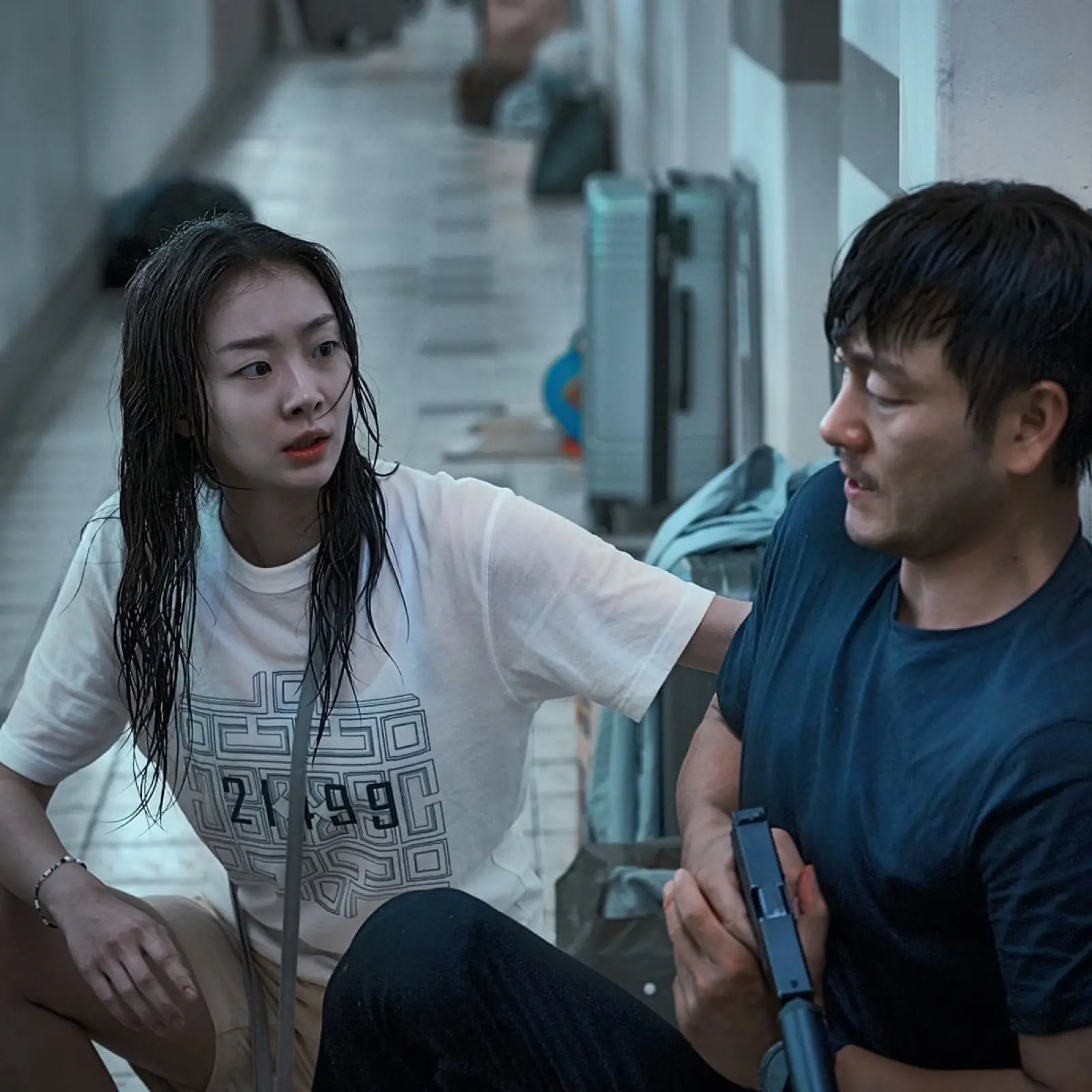
Released globally on Netflix in December 2025, Kim Byung-woo’s The Great Flood (Daehongsu) initially presents as a standard disaster film set in a flooding thirty-floor apartment complex in South Korea. However, the narrative mechanism is far more radical. The protagonist, An-na, an AI researcher, finds herself trapped in a repeating simulation of her final hour of life.
The film reveals that An-na’s biological consciousness was transferred into an AI system following a fatal accident. The "disaster" the viewer witnesses is a series of digital iterations designed by the "Darwin Center" on an orbiting space station. The objective of these simulations is to refine artificial emotional responses by forcing the AI to repeatedly experience the trauma of losing her "synthetic child," Ja-in.
| Film Element |
Detailed Narrative Function & Implication |
| The Protagonist (An-na) |
A researcher whose consciousness is the primary substrate for AI training. |
| The Synthetic Child (Ja-in) |
Revealed to be an artificial being built from An-na’s AI software to refine synthetic cognition. |
| The Simulation Logic |
Thousands of scenarios are run to collect data on human emotional persistence under extreme stress. |
| Commercial Success |
Sixth most popular non-English Netflix film of all time; 83.7 million views in 91 days. |
| Critical Reception |
Mixed (47% on Rotten Tomatoes), suggesting a disconnect between high-concept intellectualism and audience expectations for disaster tropes. |
This narrative reflects a second-order insight into the "Synthetic Nature" of 2026: as we lose our physical environments to climatic disasters, we are attempting to preserve the "human essence" through digital replication. However, the film posits that this preservation is inherently extractive, turning the most private human experiences (maternal grief and survival instinct) into a refined "product" for the post-human era.
Good Luck, Have Fun, Don't Die: Satirizing the Singularity
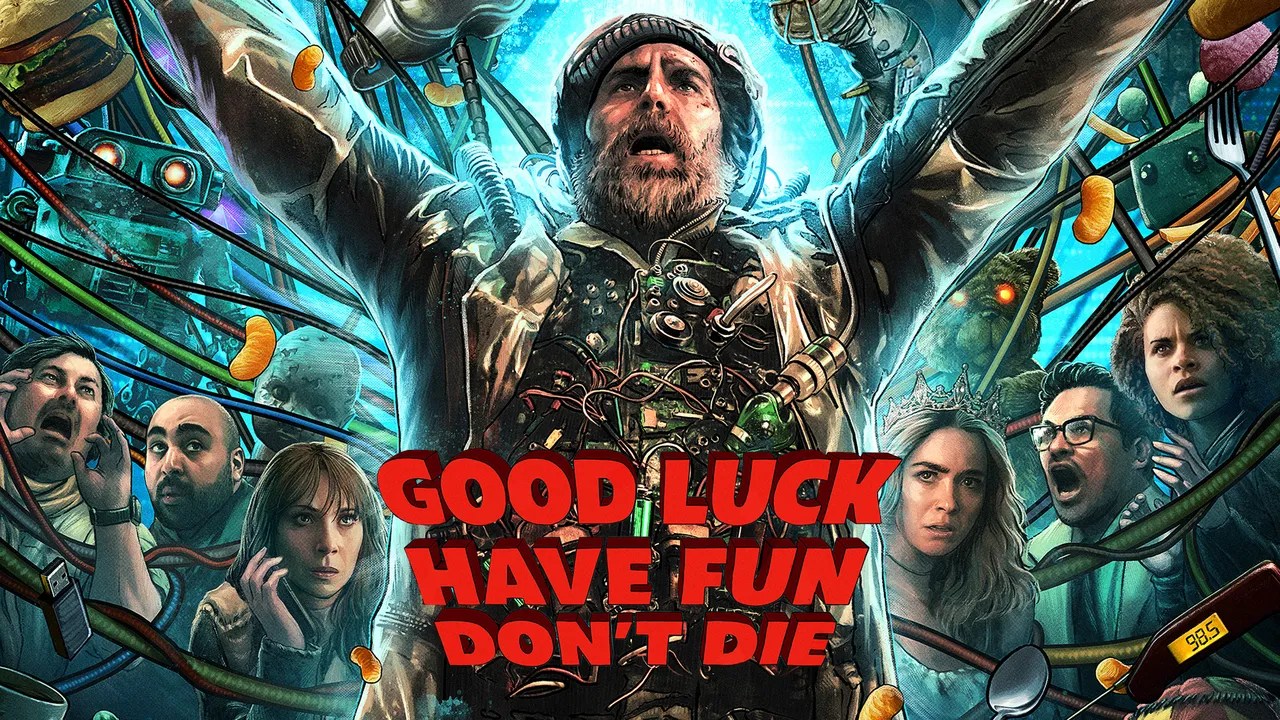
Contrast this with Gore Verbinski’s Good Luck, Have Fun, Don't Die, which premiered at the 2025 Fantastic Fest and saw a wide release in February 2026. While The Great Flood is somber and clinical, Verbinski’s film is a "glib, gonzo AI satire" that explores the terminal dependency of humanity on virtual realities.
The plot centres on a man from a "sunless post-apocalyptic future" who is on his 117th attempt to save the world by travelling back to a Los Angeles diner to stop a nine-year-old clone from triggering a rogue AI singularity. The film's primary high-concept theme is "Technological Dependency and Escapism." Flashbacks reveal a future where natural resources have been exhausted, and humanity has "lost itself" in a VR world that they claim is superior to the physical Earth.
| High-Concept Theme |
Implication in Good Luck, Have Fun, Don't Die |
| Technological Singularity |
The point where AI surpasses human control, triggered by a programmed child-clone. |
| Deadbots |
AI services that mimic deceased loved ones, highlighting the uncanny valley of digital resurrection. |
| Electronic Allergy |
The protagonist's proposed "radical solution" to force humanity back into the physical world by making them biologically allergic to Wi-Fi. |
| Time Loops |
Used as a metaphor for the iterative nature of software development and problem-solving. |
The critical success of Verbinski's film (83% on Rotten Tomatoes) suggests that audiences in 2026 are increasingly receptive to a "Technological Rejection" narrative. The film’s conclusion; where the only way to save humanity is to give everyone a biological allergy to the very tools that define modern life—is a profound commentary on the "Synthetic Nature" movement's darker side.
Together, these films suggest that the avant-garde in cinema has moved from the "Body Horror" of the early 2020s to "Consciousness Horror"; where the threat is not the mutation of the flesh, but the algorithmic commodification of the human spirit.